Start with the basics people actually use
Before someone calls a business they don’t know, they usually look it up. They check the map listing, skim the reviews, and click through to the website to see if you do what they need. If any of those three are missing or look neglected, a lot of people just move on to the next name.
So online marketing for a small business isn’t about chasing every new platform. It’s about making sure those first few looks go well.
An order that makes sense
1. A website that does its job
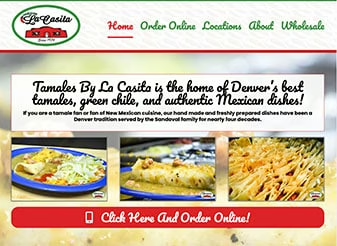 Your website is the one piece of marketing you fully own. It should load fast on a phone, show what you do and where, and make it dead simple to call or send a message. One page per main service helps both customers and Google. If you’re starting from scratch, see 8 small business website design tips.
A good website can also take a few jobs off your plate. When you’re already the owner, the estimator, and the bookkeeper, a contact form that collects the right details, an online booking system, and a page that answers the questions you get every week can save you real time on the phone.
2. Your Google Business Profile
For local businesses, this is often the first thing people see. Fill out every field, pick the right category, add real photos, and keep your hours accurate. It’s free and it matters a lot. Here’s why your Google Business Profile matters most.
3. Reviews
Ask every happy customer. Make it easy with a direct link. Reply to what people say. A steady trickle of honest reviews does more than a one-time push.
4. Your existing customers
The people who already hired you are the easiest to hire you again and the most likely to refer you. A simple email now and then, a thank-you after a job, or a seasonal reminder keeps you top of mind. See how often to send marketing email so you don’t overdo it.
5. Paid ads, once the rest is in place
Google Ads and social ads can bring in traffic fast, and you can turn them off just as fast. They work best when each ad sends people to a page that matches exactly what the ad promised. Sending ad clicks to a generic home page wastes money. If you run ads, track which ones produce calls, not just clicks. I cover that in how a website makes small business advertising work.
If you try search ads, start small and keep it focused:
- Pick one goal. Phone calls, booked appointments, or form leads. That choice shapes everything else.
- Start with your most profitable service and the areas you actually serve, instead of every keyword you can think of. Specific local searches are usually cheaper and closer to a hire than broad ones.
- Write ads the way you’d describe your business to a neighbor, and give people a clear next step.
- Check in regularly. Keep what brings in customers and cut what doesn’t. Campaigns left alone for months tend to burn money.
If you’re just starting out
New businesses often feel pressure to be everywhere on day one. You don’t need to be. Get your domain, a simple site with your services and contact info, and your Google Business Profile set up. Then focus on doing great work and asking for reviews. Add more once you know where your customers come from.
What to skip (for now)
- Posting on every social platform because someone said you should
- Paying for ads before your website can turn a visitor into a call
- Buying “SEO packages” that can’t explain what they’ll actually do
- Chasing likes and followers that never turn into customers
Measure what pays the bills
At the end of the month, the numbers that matter are calls, form submissions, booked jobs, and where those customers came from. Ask every new customer how they found you. It’s old-school and it works.
If you want a hand getting the basics right, call (720) 780-9998. We’ll tell you what’s worth doing and what isn’t.