
When Touchstone Mechanical came to us, they had a problem a lot of small businesses face: they’re great at what they do, but their website wasn’t showing it. They’ve been taking care of Denver-area homes since 2014, but online? They were barely visible.
Their old site worked fine if someone already knew their name, but it wasn’t doing much to help new customers find them. We rebuilt it from the ground up with two goals: make it fast, and make it easy for Google (and people) to understand what they actually do.
What Their Online Presence Looked Like Before
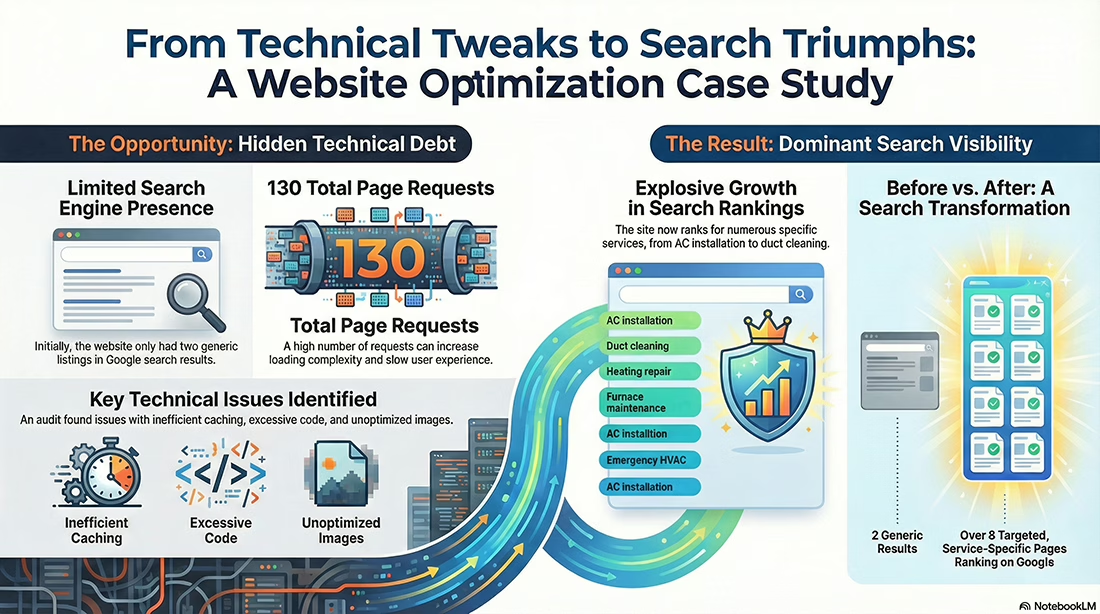
Before the redesign, even if you searched for Touchstone by name, they might show up, but only with two basic links—a homepage and a general services page. That’s it. No detail, no service-specific pages, nothing that really told potential customers what made them different.
On-page SEO is mostly one-time foundational work, while local SEO is competitive and shifts constantly based on reviews, competitors, and Google algorithm updates. Looking for help with your local SEO? Give us a call and let’s talk about your needs and the solutions we can provide.

The site itself was older, slower, and built before Google started caring as much about page speed and user experience. It got the job done, but just barely.
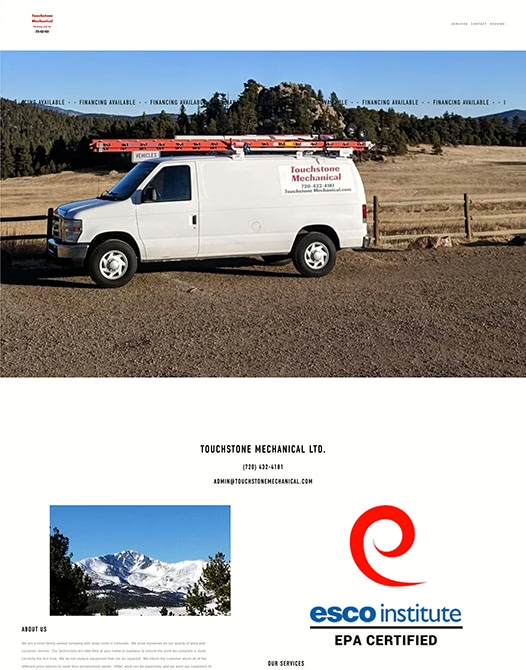
Touchstone Mechanical: Before

Touchstone Mechanical: After
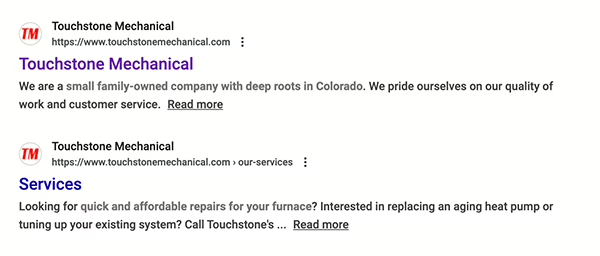
Touchstone Mechanical: Search Results Before
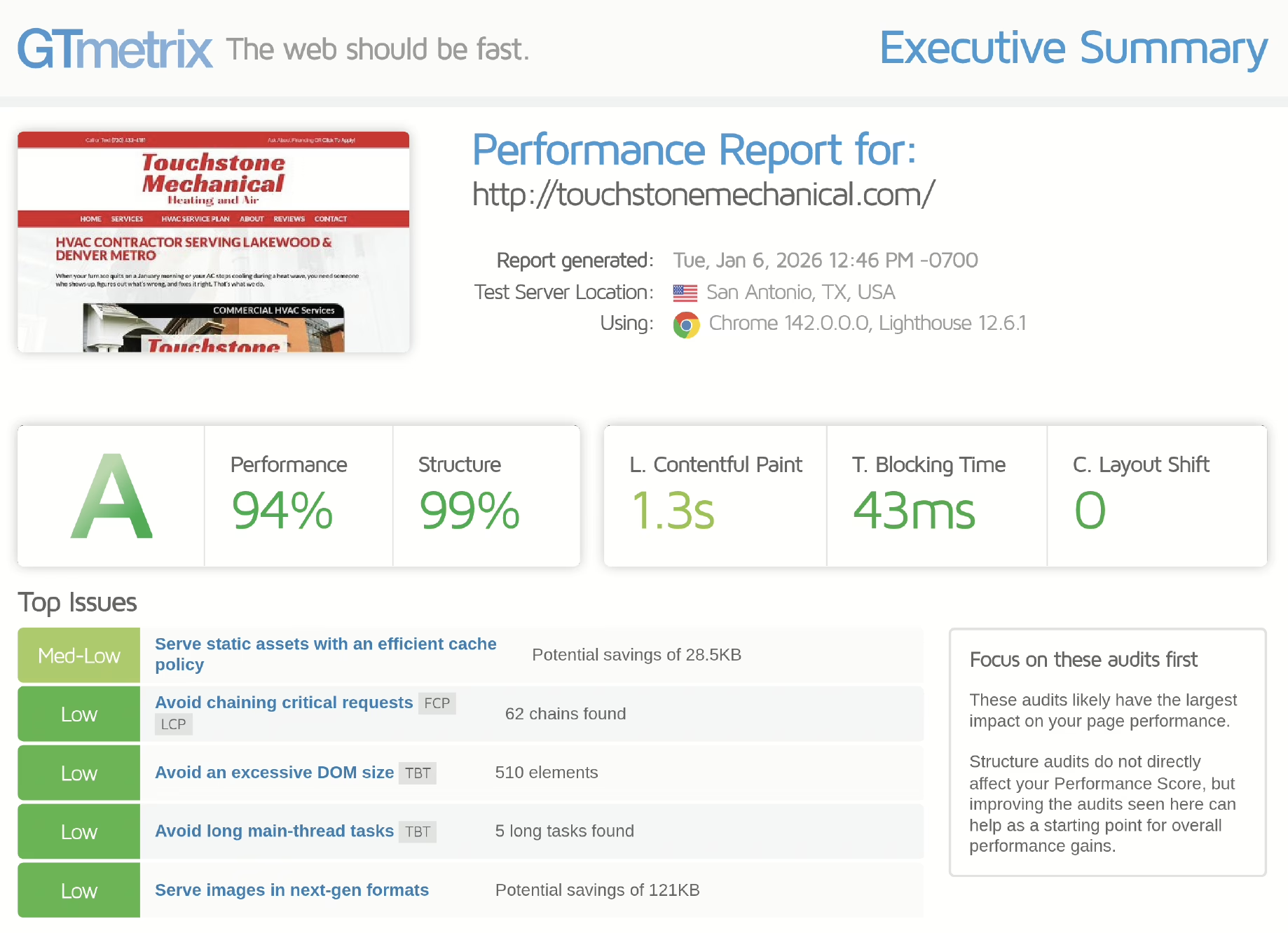
Touchstone Mechanical: Speed Matters!
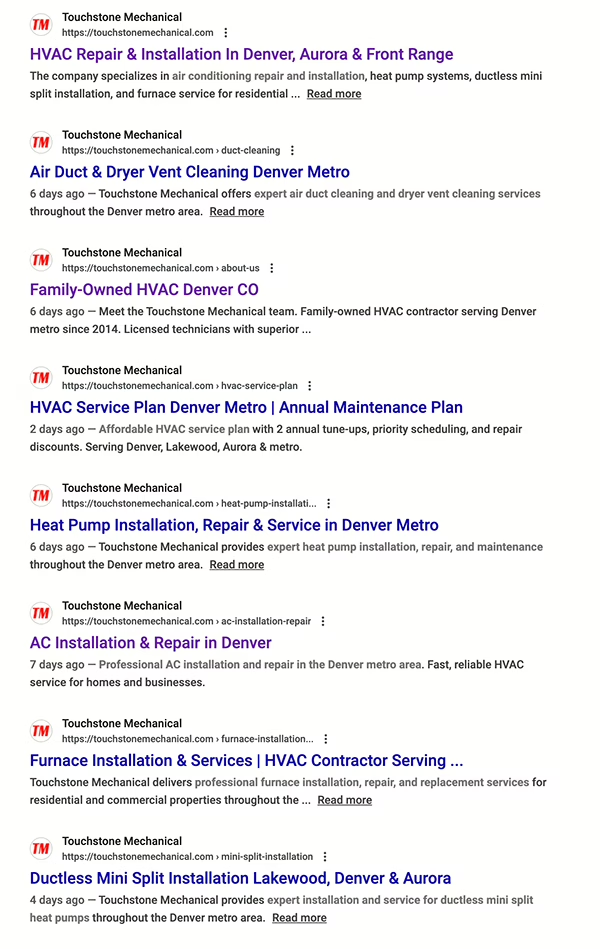
Touchstone Mechanical: Search Results After
The New Site: Fast Enough to Actually Matter
Here’s where things got interesting. The new site scores a 94% on performance and a 99% on structure according to GTmetrix (which is about as good as it gets for real-world sites).
More importantly, here’s what that means for someone visiting the site:
- The main content loads in 1.3 seconds
- The whole page is interactive in 1.5 seconds
- Fully loaded in 2.1 seconds
Why does this matter? Because Google uses Core Web Vitals—including page speed metrics like Largest Contentful Paint—as ranking signals in their search algorithm. But also because people just leave slow websites. If your site takes 5+ seconds to load, you’ve already lost half your visitors.
Actually Showing Up for What They Do
Speed is only part of it. The bigger change was how we structured the content and added what’s called schema markup (basically a way to tell search engines exactly what each page is about).
Now when someone searches for them, instead of two generic links, they see a full menu of services right in the search results:
- Air Duct & Dryer Vent Cleaning
- Heat Pump Installation and Repair
- AC and Furnace Installation
- Ductless Mini Split Installation
- Annual HVAC Service Plans
Each of these links goes directly to a page dedicated to that service, with details about what they do, what areas they cover (Denver, Aurora, Lakewood, etc.), and why they’re qualified to do it.
We also made sure the content was written in a way that’s easy for search engines—and increasingly, AI tools like ChatGPT—to understand and reference. That means being clear about who they are (family-owned), where they work (Denver metro), and what services they offer.
What Changed for Them
The combination of faster loading times and better visibility in search results means Touchstone now has a website that actually works to bring in new customers. Instead of being buried or barely visible, they show up with multiple relevant links that make it easy for homeowners to find exactly what they need.
It’s not magic—it’s just building a site the right way, with both people and search engines in mind.
Think of it this way: The old site was like having a small business card tacked to a community bulletin board. Sure, it was there, but you had to know where to look. The new site is more like having a clear, well-lit sign on a busy street that tells people exactly what you do before they even walk in the door. And it’s open 24/7, whether you’re there or not.


Leave A Comment